
Table of Contents
ToggleA refrigerator that won’t cool, an ice maker that leaks, or mysterious humming sounds can throw off an entire household, and your food budget. Before you call a technician and rack up a service charge, many GE refrigerator problems are fixable with basic troubleshooting. Most common issues stem from simple oversights: a misadjusted thermostat, dirty condenser coils, blocked water lines, or a clogged drain. This guide walks you through the most frequent GE refrigerator issues, what you can safely diagnose and repair yourself, and when it’s time to bring in a professional. With the right approach and a few basic tools, you’ll likely get your unit running smoothly again.
Key Takeaways
- GE refrigerator troubleshooting often starts with simple fixes like adjusting the thermostat to the recommended 35°F–40°F range and checking that the ice maker is enabled rather than assuming mechanical failure.
- Dirty condenser coils are the number-one cause of poor cooling and can be safely cleaned every 6–12 months using a vacuum with a brush attachment to restore efficiency and extend the refrigerator’s lifespan.
- Water supply line issues causing ice maker leaks or slow production can usually be resolved by inspecting for kinks, applying heat tape to frozen lines, or replacing the inlet line as a straightforward DIY task.
- Distinguish between normal refrigerator sounds (quiet hum, clicks, whooshing) and abnormal ones (grinding, squealing, rattling), and check that shelves and drawers are seated properly before assuming a major repair is needed.
- Clogged or frozen defrost drain holes can be cleared with warm water and a turkey baster, while refrigerant leaks and sealed system repairs require a licensed technician to avoid safety hazards and EPA violations.
- Before spending on repairs, confirm whether your GE refrigerator has an active warranty or home protection plan, as these often cover parts and labor costs.
Refrigerator Not Cooling Properly
If your GE refrigerator feels warm inside or food spoils faster than usual, start with the easiest diagnostics before suspecting a compressor failure. A surprising number of cooling issues come down to settings, airflow, or maintenance, not mechanical breakdown.
Check the Thermostat Setting and Temperature Controls
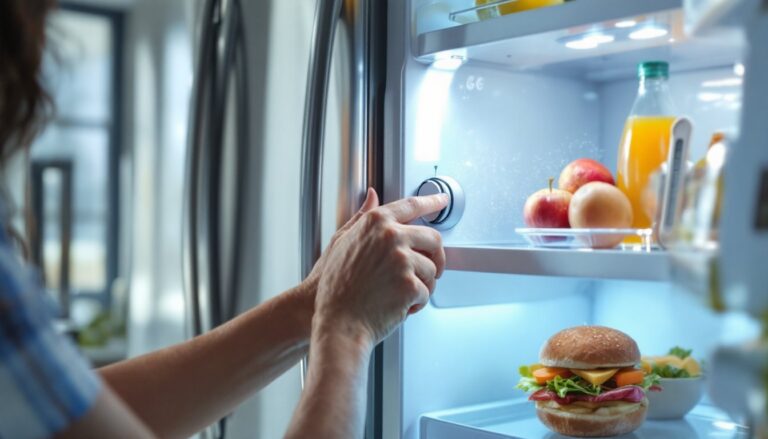
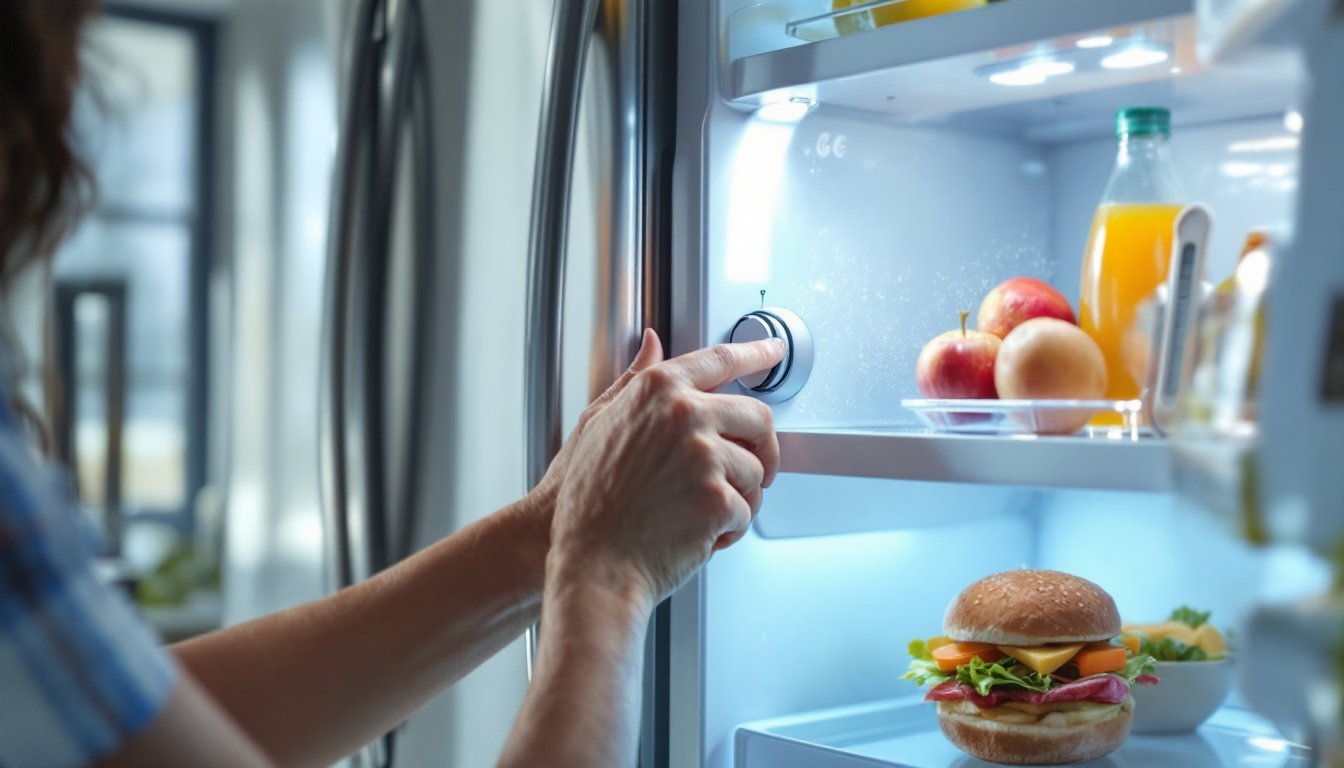
Your first step: confirm the thermostat is set correctly. GE refrigerators typically have an internal dial or digital display set to between 35°F and 40°F for the fridge section and **0°F to 5°F for the freezer. If someone bumped the dial or a child adjusted the controls, this is your culprit.
Locate your thermostat (usually inside the fridge, sometimes on the exterior control panel) and check the current setting. If it’s been moved, adjust it back to factory recommendation and wait 24 hours for the interior temperature to stabilize. Use a basic appliance thermometer (under $10) to verify actual temperatures, display readings can drift.
Also check that the ice maker is not in the off position. On some GE models, the ice maker switch can accidentally get pushed to “off,” and frustrated homeowners assume a cooling problem when the real issue is a disabled component.
Clean the Condenser Coils
Dirty condenser coils are the number-one reason for poor cooling in refrigerators, and it’s 100% DIY-fixable. These coils sit behind or below your GE unit and release heat as the refrigerant cycles through. When dust, pet hair, and debris clog them, the system has to work harder and cools less effectively.
Here’s what you’ll need:
- Flashlight
- Vacuum with brush attachment (or soft brush)
- Coil cleaner (optional, but effective)
Unplug the refrigerator before you start. Most GE models have a removable kickplate at the bottom front, pull it straight toward you to access the coils below. If your model has rear-mounted coils, you’ll need to pull the unit away from the wall (recruit a helper: refrigerators are heavy).
Use the brush attachment to gently vacuum the coils, working left to right. Don’t use a high-pressure setting: you can damage the thin aluminum fins. For stubborn buildup, spray a refrigerator coil cleaner per instructions. Once clean, wipe down any loose debris and replace the kickplate.
Repeat this cleaning every 6 to 12 months, depending on pet hair and dust levels in your kitchen. Clean coils improve efficiency and can extend your refrigerator’s lifespan significantly.
Ice Maker Malfunctions and Leaks
Ice makers fail more often than other refrigerator components, but most issues are straightforward to diagnose. Whether your ice maker isn’t producing cubes or water is pooling inside the freezer, the fix usually doesn’t require a technician visit.
Start with the easiest checks: confirm the water supply is on (look for a small valve behind or under the unit near the wall connection), ensure the ice maker arm isn’t in the “off” position, and verify the ice bin isn’t full (some models stop production automatically). If the ice maker was recently installed or your GE unit is new, run it for 24 to 48 hours before expecting full production, the system needs time to prime.
Inspect Water Supply Lines
Leaks and slow ice production usually point to a kinked, frozen, or clogged water line. The inlet line that feeds water to the ice maker and dispenser is often flexible plastic tubing (sometimes 1/4-inch diameter), and it’s vulnerable to damage.
Unplug the refrigerator and locate the water inlet valve behind the unit. Trace the line from the wall connection to the valve, looking for visible kinks, cracks, or ice buildup. If you see kinks, carefully straighten the line, don’t bend it sharply back and forth, or it will crack.
For frozen lines, this happens when the refrigerator is pushed against a cold exterior wall or the line runs through an unheated space. Wrap the line with a heat tape (a low-wattage electric heating cord, available at hardware stores) and insulate with foam pipe wrap. Set the thermostat slightly warmer or improve air circulation around the unit.
If the line is cracked or has a small leak, you have two options: replace the entire line (a 30-minute DIY job with basic tools) or contact a technician. The inlet valve itself can also fail, it’s a common part that GE refrigerators use, and replacement is possible for confident DIYers with instructional guides available online.
Before replacing anything, check if your refrigerator has a warranty or home protection plan. Home warranty companies often cover refrigerator parts and labor, so a quick call might save you money.
Strange Noises and Unusual Sounds
Refrigerators aren’t silent, but certain sounds signal trouble. Understanding what’s normal and what’s not helps you avoid unnecessary service calls.
Normal sounds include a quiet hum (the compressor running), clicks when the thermostat cycles on and off, and gentle whooshing as fans operate. Abnormal sounds include loud grinding, rattling, high-pitched squealing, or rhythmic thumping.
A rattling noise often means something inside the unit has shifted or fallen. Open the door and check that shelves are seated properly, drawers are fully inserted, and ice cubes aren’t jamming the dispenser chute. Sometimes a water bottle or loose container slides forward and vibrates against the wall.
If the noise comes from beneath the unit, check that the refrigerator is level. Use a spirit level on the top of the unit (front to back, then side to side). If it’s tilted toward the back, turn the front leveling legs clockwise to raise the front slightly. A unit that tilts forward improves door seal and drainage.
A high-pitched squealing usually indicates a fan bearing issue or a failing condenser fan motor. This is a professional repair, attempting to replace a motor yourself risks electrical shock or refrigerant exposure. If you hear squealing, have a technician evaluate it.
A loud grinding sound suggests compressor trouble, which also requires a professional. But, before you assume the worst, confirm the noise isn’t coming from ice being crushed in the dispenser or a fan blade hitting frost buildup. Sometimes running the defrost cycle solves the problem. If the grinding persists, call a repair service.
Water Dispenser and Refrigerant Line Issues
Water dispensers and clogged drain lines cause frustration, but both are typically DIY-solvable. If water isn’t dispensing from the door, the first suspect is a frozen line or air lock in the system.
Dispense water for 30 seconds in a continuous stream, this flushes air pockets and sometimes clears minor clogs. If nothing comes out after a full minute, the line is likely frozen or blocked. Unlike ice maker lines, dispenser lines run through the refrigerator cabinet and can freeze in the coldest zones.
Set the thermostat 2 to 3 degrees warmer temporarily (e.g., from 38°F to 41°F) and wait 4 to 6 hours. This gentle warming thaws the line without risking food safety. Once water flows again, return the thermostat to normal. If freezing recurs, apply heat tape to exposed line sections.
If water pools inside the refrigerator or leaks onto the floor, the issue is likely a clogged or frozen defrost drain. Most GE refrigerators have a small drain hole at the back of the fridge (often in a corner) that channels condensation to a pan beneath the unit. Debris or ice can block this hole.
Locate the drain hole and flush it with warm water using a turkey baster or small funnel. For stubborn clogs, a straightened paper clip or a plumbing snake (a thin, flexible wire) can clear the blockage. After clearing, pour a bit of distilled water through to confirm flow.
Refrigerant line issues, actual leaks in the sealed cooling system, require a licensed technician. Signs include poor cooling even though clean coils, oil spots around the unit, or a hissing sound. Refrigerant is a controlled substance, and handling it requires EPA certification. Don’t attempt this yourself. Family Handyman and similar resources offer detailed guides for safe DIY work, but sealed system repairs are the clear exception.
If your GE refrigerator is out of warranty and repair costs approach half the unit’s value, replacement may be more cost-effective than repair. Factor in the age of the unit and whether parts are still readily available.